Same Medicine, Different Price Tag: A Canadian Patient's Guide to Generic and Brand-Name Drugs
When a pharmacist slides two bottles across the counter — one bearing a familiar brand name, the other a clinical-sounding generic label — many Canadians pause. The prices are dramatically different. The packaging is unfamiliar. The question forms almost instinctively: Are these really the same thing?
The short answer is yes, in all the ways that matter medically. But the longer answer is worth understanding, because it can shape how you manage your health and your household budget for years to come.
What Makes a Drug "Generic"?
A generic medication contains the same active pharmaceutical ingredient as its brand-name counterpart, administered at the same dose, in the same form (tablet, capsule, liquid), and intended for the same medical purpose. When a pharmaceutical company develops a new drug, it receives patent protection — typically for up to 20 years — that prevents competitors from producing equivalent versions. Once that patent expires, other manufacturers can apply to produce and sell the molecule under a different name, usually at a significantly lower price.
In Canada, the brand-name manufacturer no longer holds exclusive rights to the compound, but they do retain their trademarked name. That is why the same active ingredient might be sold as "Lipitor" by one company and simply as "atorvastatin" by another.
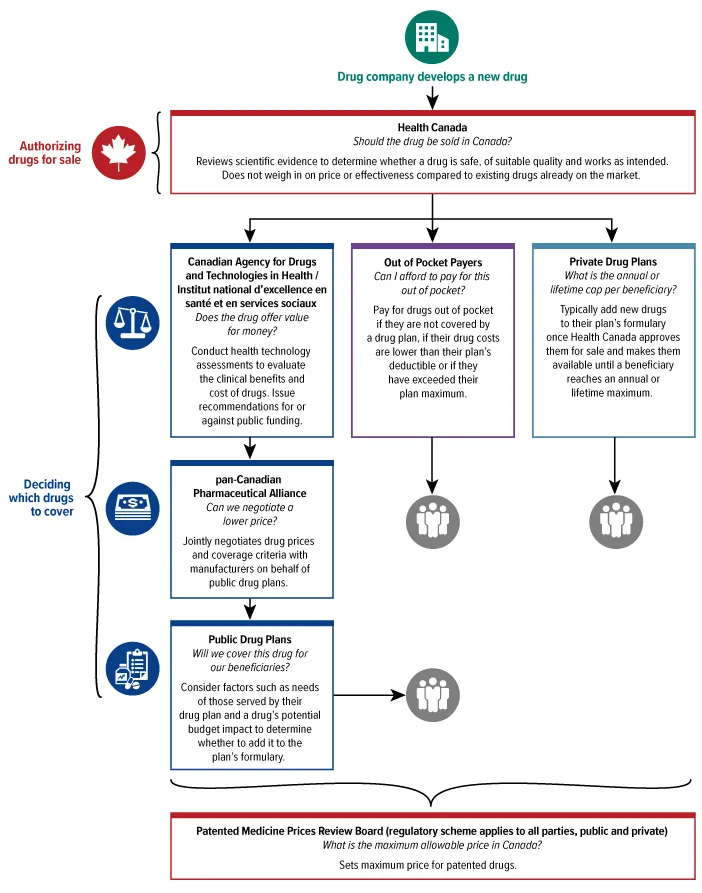
Health Canada's Role: The Approval Process Explained
Perhaps the most important thing Canadian patients should understand is that generic drugs are not approved on trust — they are approved through evidence. Health Canada requires manufacturers seeking approval for a generic product to demonstrate bioequivalence to the original brand-name drug. This means the generic must be absorbed into the bloodstream at a rate and to an extent that falls within an accepted range of the reference product — generally between 80% and 125% of the brand-name drug's pharmacokinetic profile, a standard applied by regulators worldwide.
To receive a Notice of Compliance from Health Canada, a generic manufacturer must submit clinical data, typically from bioequivalence studies conducted in healthy volunteers. The agency reviews manufacturing standards, facility inspections, and quality control processes before granting approval. This is not a rubber-stamp exercise; it is a rigorous scientific evaluation.
What generics are not required to reproduce are the inactive ingredients — the fillers, binders, colourants, and coatings that give a pill its shape, size, and appearance. These non-medicinal ingredients can differ between products, which occasionally matters for patients with specific allergies or sensitivities.
Why the Price Difference Is So Significant
Generic medications can cost anywhere from 25% to 80% less than their brand-name equivalents in Canada. The reason is largely structural: generic manufacturers do not bear the enormous research and development costs that original drug companies invest over a decade or more before bringing a new compound to market. They are essentially replicating a proven molecule with established clinical data.
For Canadians managing chronic conditions — diabetes, hypertension, depression, thyroid disorders — the cumulative savings over months and years can be substantial. A patient paying out of pocket for a brand-name statin might spend several hundred dollars annually more than a neighbour taking the generic version of the same drug. For those without comprehensive drug coverage, or whose provincial formulary places brand-name drugs in a higher co-pay tier, switching to a generic can meaningfully reduce financial strain.
Common Misconceptions Worth Addressing
"Generic drugs are lower quality." This is among the most persistent myths in pharmacy. Quality is regulated — not assumed — under Health Canada's framework. A generic that does not meet manufacturing and bioequivalence standards simply does not receive approval to be sold in Canada.
"If the pill looks different, it must work differently." Appearance — colour, size, shape — is determined by non-medicinal ingredients and branding decisions, not by the active compound. Two pills can look entirely different and deliver identical therapeutic outcomes.
"My doctor prescribed the brand name, so I must take the brand name." In most Canadian provinces, pharmacists are permitted — and in some cases encouraged — to substitute a therapeutically equivalent generic unless the prescriber has explicitly indicated otherwise on the prescription. If your physician has written "no substitution," there is likely a clinical reason worth discussing with them directly.
When Brand-Name Medications May Be Preferable
There are genuine clinical scenarios in which a prescriber or patient may have sound reasons to stay with a brand-name product.
For medications with a narrow therapeutic index — drugs where even small fluctuations in blood concentration can have significant clinical consequences — consistency of formulation becomes especially important. Examples include certain anticoagulants, anticonvulsants, and thyroid hormones like levothyroxine. Some clinicians prefer that patients on these medications remain on the same manufacturer's product, whether brand or generic, rather than switching between them.
Additionally, patients who have experienced side effects they believe are related to non-medicinal ingredients — certain dyes, for instance — may have legitimate reasons to prefer one formulation over another. These cases are relatively uncommon but not dismissible.
Practical Steps for Canadian Patients
-
Ask your pharmacist directly. Pharmacists are one of Canada's most accessible healthcare professionals. Before assuming a brand-name drug is your only option, ask whether an approved generic equivalent is available and covered under your plan.
-
Review your provincial drug benefit formulary. Provinces including Ontario, British Columbia, Alberta, and Quebec each maintain public drug benefit lists that may cover generics at a preferred rate. Knowing which tier your medication falls under can help you make informed decisions.
-
Discuss substitution preferences with your physician. If you are managing a condition that requires careful dosage stability, your doctor can note this on your prescription. Open communication is always preferable to silent assumptions.
-
Consider consistency once you begin a generic. If you are stabilised on a particular generic manufacturer's product, try to remain on that version when refilling, particularly for narrow therapeutic index drugs.
The Bottom Line
For the vast majority of Canadians, generic medications represent a safe, effective, and considerably more affordable option for managing their health. Health Canada's approval standards exist precisely to ensure that cost savings do not come at the expense of therapeutic outcomes. Understanding these standards — and the circumstances in which individual preferences may reasonably differ — puts patients in a stronger position to make informed choices at the pharmacy counter.
At Canadian Pharmacy Stock, we believe that access to accurate pharmaceutical information is as important as access to the medications themselves. Whether you are comparing options for the first time or reconsidering a long-standing prescription routine, knowledge is the most valuable tool in your medicine cabinet.